

E-mail:
david@wuyunconveyor.com

REQUEST A QUOTE
ENG
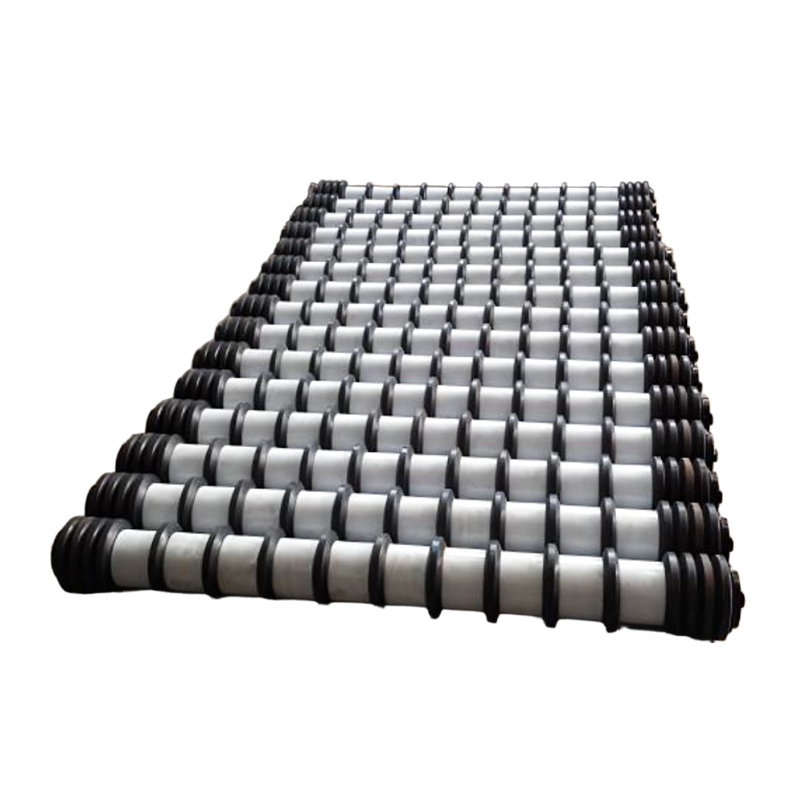
The Conveyor Comb Roller is a self-cleaning return roller designed to support the empty conveyor belt while helping remove material carried back on the belt surface. Elastic rubber rings are arranged at intervals along the roller body to contact the return belt, helping reduce material buildup and maintain cleaner belt operation.
The spaced rubber ring design also provides additional traction between the comb roller and conveyor belt, helping improve belt tracking and reduce the risk of belt deviation. Its durable construction, effective sealing, low running resistance, and smooth rotation make it suitable for continuous belt conveyor applications where carryback and belt tracking are important concerns.
Key Features
Self-Cleaning Rubber Ring Design
Elastic rubber rings are arranged at intervals along the roller body to contact the return belt and remove adhering material. The open spacing between the rings allows fines and debris to pass through rather than accumulating on the roller surface.
Improved Belt Tracking
The rubber rings increase controlled contact with the return belt, helping provide stable belt support and improve belt tracking. This can reduce the tendency of the belt to wander during operation.
Debris-Release Structure
The gaps between the rubber rings provide space for carried-back material and fines to fall away from the roller. This helps reduce material buildup and supports smoother roller rotation.
Durable Rubber Construction
The rubber rings are designed to provide resistance to wear, repeated mechanical loading, and aging during conveyor operation. The roller construction also provides mechanical strength for continuous service.
Sealed and Low-Resistance Operation
An effective sealing structure helps protect the internal bearing components, while the low-resistance roller design supports smooth and relatively quiet rotation during conveyor operation.
Product Advantages
Self-cleaning performance: Rubber rings help remove material adhering to the return side of the conveyor belt.
Reduced material buildup: Spacing between the rings allows fines and carryback material to pass through instead of accumulating around the roller.
Improved belt tracking: Increased contact between the rubber rings and belt helps reduce belt wandering.
Wear-resistant construction: Durable rubber components provide resistance to repeated contact and mechanical loading.
Smooth operation: Effective sealing, low rotational resistance, and balanced roller operation support reliable conveyor performance.
Applications
The Conveyor Comb Roller is installed on the return side of belt conveyor systems where material carryback, belt contamination, or belt wandering can affect conveyor operation. Its rubber ring structure provides continuous contact with the return belt to help remove adhering material while supporting stable belt travel.
Typical applications include:
Bulk Material Handling: Used on return sections of conveyors handling bulk materials where carryback and material buildup on the belt are common concerns.
Mining and Quarrying: Suitable for return belt sections handling extracted materials and aggregates, particularly where material carryback can affect roller operation and belt tracking.
Coal and Thermal Power: Used in conveyor systems where fine or sticky material may adhere to the return side of the belt and require continuous cleaning.
Cement and Building Materials: Suitable for material conveying systems where powdery or granular carryback can accumulate on the return belt.
Ports and Material Transfer Facilities: Used on return sections of bulk material conveyors to help control carryback and maintain cleaner belt operation.
General Industrial Conveying: Suitable for belt conveyor systems requiring return belt support, self-cleaning action, and improved belt tracking.
Ordering & Quotation Information
Information Required for Quotation
Please provide the conveyor belt width, roller diameter and length, shaft dimensions, installation position, required quantity, and return-side operating conditions. Information about sticky materials and carryback is useful for confirming cleaning requirements.
Technical Confirmation & Lead Time
We will confirm the comb roller configuration according to the return-side arrangement, belt width, dimensional requirements, cleaning requirements, and operating environment. Lead time is determined by specifications, quantity, material preparation, and purchased components.
Packaging, Delivery & Quality
Packaging and delivery are arranged according to roller dimensions, quantity, and transportation requirements. Dimensions, quantity, appearance, and packaging completeness are checked before shipment.
FAQ
What is a Conveyor Comb Roller used for?
A Conveyor Comb Roller is installed on the return side of a belt conveyor to support the empty belt, remove adhering material, and help maintain stable belt tracking.
How does a comb roller clean the conveyor belt?
Elastic rubber rings mounted at intervals along the roller surface contact the return belt and help remove material adhering to the belt. The spaces between the rings allow removed material and fines to fall away from the roller.
How does a comb roller help prevent belt deviation?
The rubber rings increase contact between the roller and return belt, helping maintain more stable belt tracking and reduce the tendency of the belt to wander.
What types of materials can a comb roller help remove?
The self-cleaning design is intended to help remove carryback, fines, and other adhering materials from the return side of the conveyor belt. Its effectiveness depends on the material characteristics and conveyor operating conditions.
Where should a comb roller be installed?
A comb roller is generally installed on the return side of a belt conveyor, particularly in sections where material carryback or belt tracking problems need to be controlled.
What are the advantages of rubber rings compared with a smooth roller surface?
The spaced rubber rings provide both belt contact and a cleaning effect. Unlike a smooth roller surface, the gaps between the rings allow fines and carryback material to pass through, helping reduce material buildup around the roller.
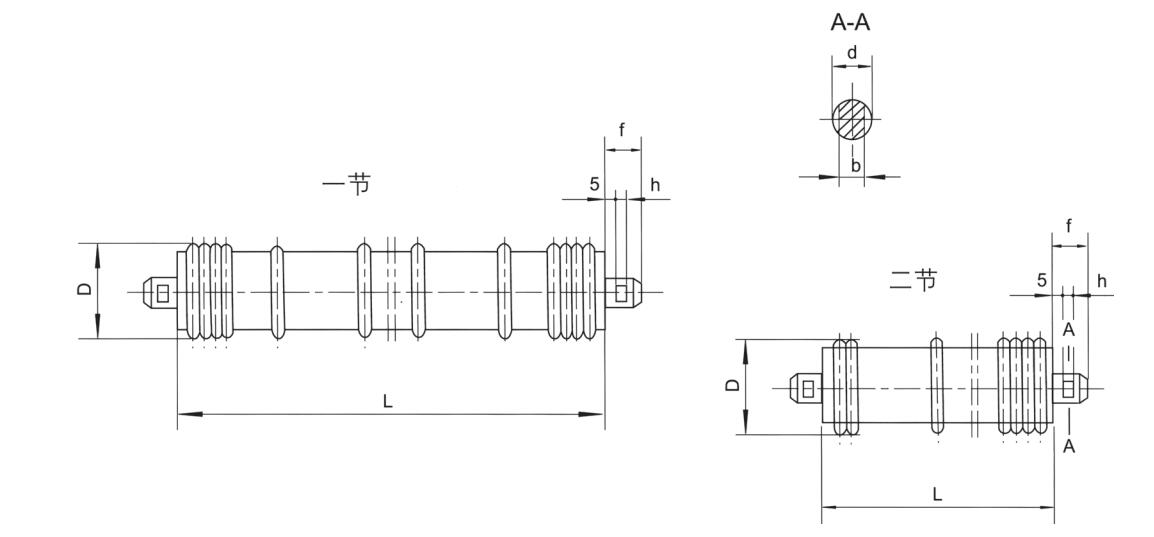
Unit: mm
| D | d | Bearing model | L | b | h | f | Weight of rotating | Drawing No | Number of |
| parts (kg) | sections | ||||||||
| 108 | 20 | 4G204 | 465 | 14 | 6 | 14 | 4.23 | DTⅡGS2105 | 2 |
| 950 | 7.7 | DTⅡGS2111 | 1 | ||||||
| 133 | 25 | 4G205 | 600 | 18 | 8 | 17 | 6.76 | DTⅡGS3207 | 2 |
| 700 | 7.68 | DTⅡGS3208 | 2 | ||||||
| 800 | 8.52 | DTⅡGS3210 | 2 | ||||||
| 1150 | 11.73 | DTⅡGS3212 | 1 | ||||||
| 159 | 4G205 | 700 | 9.72 | DTⅡGS4208 | 1 | ||||
| 1400 | 15.3 | DTⅡGS4213 | 2 | ||||||
| 4G305 | 700 | 9.84 | DTⅡGS4308 | 2 | |||||
| 800 | 11.04 | DTⅡGS4310 | 2 | ||||||
| 1400 | 15.3 | DTⅡGS4313 | 1 | ||||||
| 1600 | 20.4 | DTⅡGS4314 | 1 | ||||||
| 30 | 4G306 | 800 | 22 | 11.5 | DTⅡGS4410 | 2 | |||
| 1400 | 18.35 | DTⅡGS4413 | 1 | ||||||
| 1600 | 20.71 | DTⅡGS4414 | 1 |
technological innovation, keep improving
With ingenuity, we are committed to global sustainable development.
Professional Conveyor Manufacturer, Since 1998.
Mobile QR Code
News & Updates
Contact infor.
 Phone / Whatsapp:
 Tel: +86-0519-86511555
 E-mail: david@wuyunconveyor.com
 Add: No.16 Xinfa Road, Wujin District, Changzhou City, Jiangsu Province, China

 English