

E-mail:
david@wuyunconveyor.com

REQUEST A QUOTE
ENG
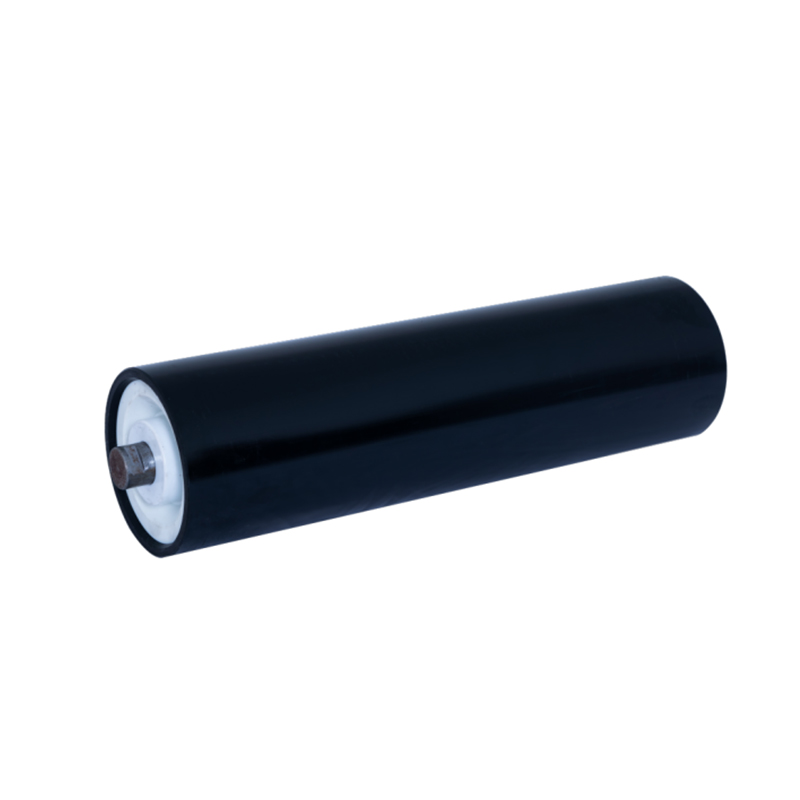
The HDPE Conveyor Roller is manufactured from high-density polyethylene (HDPE), providing a lightweight and corrosion-resistant solution for belt conveyor systems operating in demanding environments.
Compared with traditional steel rollers, HDPE conveyor rollers offer excellent resistance to moisture, corrosion, and chemical exposure. The smooth roller surface and low rotational resistance help reduce belt wear, improve conveying efficiency, and support stable operation in wet, acidic, alkaline, or material handling environments where metal rollers may experience corrosion issues.
The lightweight HDPE construction also reduces the overall load on conveyor structures while allowing easier installation and maintenance.
Key Features
Corrosion and Chemical Resistance
The HDPE material provides excellent resistance to moisture, chemicals, and corrosive environments, making the roller suitable for applications where conventional steel rollers may be affected by rust or chemical exposure.
Lightweight Conveyor Design
The lightweight structure of the HDPE Conveyor Roller reduces handling difficulty during installation and helps lower the load placed on conveyor supporting structures.
Smooth Surface and Low Friction
The smooth HDPE roller surface reduces contact resistance between the roller and conveyor belt, helping minimize belt wear and improve conveying efficiency.
Impact-Resistant Material Performance
The high-strength HDPE material provides good impact resistance and reliable mechanical performance for continuous conveyor operation under normal working conditions.
Reduced Maintenance Requirements
The corrosion-resistant material properties help reduce maintenance caused by rust and surface deterioration, supporting longer service intervals.
Product Advantages
Excellent corrosion resistance: Performs reliably in wet, acidic, alkaline, and chemically exposed environments.
Extended conveyor component life: Resistant to rust and corrosion-related damage compared with conventional steel rollers.
Reduced belt wear: Smooth surface characteristics help minimize friction between the roller and conveyor belt.
Lightweight installation: Lower roller weight simplifies handling and installation.
Energy-efficient operation: Low rotational resistance helps reduce conveying resistance during operation.
Applications
The HDPE Conveyor Roller is designed for belt conveyor systems operating in environments where corrosion resistance, lightweight construction, and reduced maintenance requirements are important.
Typical applications include:
Chemical Processing: Suitable for conveying environments where exposure to corrosive materials or chemical conditions may affect traditional metal rollers.
Food Processing: Used in applications requiring clean conveyor operation and resistance to moisture or chemical cleaning environments.
Mining and Mineral Processing: Suitable for wet or corrosive material handling environments where conventional steel rollers may experience accelerated corrosion.
Salt and Fertilizer Handling: Used in conveying systems where corrosive materials can affect standard steel components.
Waste Management and Recycling: Suitable for conveyor applications involving moisture, contaminants, and demanding operating conditions.
Wet Material Handling: Provides reliable roller performance in environments with frequent water exposure or high humidity.
Ordering & Quotation Information
Information Required for Quotation
Please provide the roller diameter, roller length, shaft dimensions, bearing requirements, conveyor belt width, installation position, quantity, and operating environment. Information about moisture, chemical exposure, or corrosive conditions is useful when confirming suitability.
Technical Confirmation & Lead Time
We will confirm the HDPE roller configuration according to conveyor arrangement, dimensional requirements, belt width, installation conditions, and environmental requirements. Lead time depends on specifications, quantity, material preparation, and purchased components.
Packaging, Delivery & Quality
Packaging and delivery are arranged according to roller dimensions, quantity, transportation method, and destination. Products are inspected according to confirmed technical requirements before shipment.
FAQ
What is an HDPE Conveyor Roller?
An HDPE Conveyor Roller is a conveyor roller manufactured from high-density polyethylene material, designed for belt conveyor systems requiring corrosion resistance, lightweight construction, and low-friction operation.
What are the advantages of HDPE rollers compared with steel rollers?
HDPE rollers provide better resistance to corrosion, moisture, and chemical exposure while offering lower weight and reduced maintenance requirements compared with conventional steel rollers.
Where are HDPE conveyor rollers commonly used?
HDPE conveyor rollers are commonly used in chemical processing, food production, mining, wet material handling, salt, fertilizer, and other environments where corrosion resistance is required.
Can HDPE rollers reduce conveyor belt wear?
Yes. The smooth HDPE surface and low rotational resistance help reduce friction between the roller and conveyor belt, which can help minimize belt wear.
Are HDPE rollers suitable for humid environments?
Yes. HDPE material has excellent moisture resistance and does not rust like traditional steel rollers, making it suitable for humid and wet operating conditions.
How does the lightweight design benefit conveyor systems?
The lightweight structure makes installation easier and reduces the overall load on conveyor support structures, which can improve handling efficiency during system assembly and maintenance.
| Parameter | Range |
| Roller body material | HDPE (high-density polyethylene) |
| Roller body diameter | φ50–φ159 mm |
| Roller body length | 200–1600 mm |
| Wall thickness | 5–15 mm |
| Shaft diameter | φ20–φ40 mm |
| Bearing model | 6204–6208 |
| Applicable belt width | 500–2000 mm |
| Applicable belt speed | ≤4.0 m/s |
| Working temperature | -20°C ~ +60°C |
| Features | Wear-resistant, corrosion-resistant, lightweight, belt-friendly |
technological innovation, keep improving
With ingenuity, we are committed to global sustainable development.
Professional Conveyor Manufacturer, Since 1998.
Mobile QR Code
News & Updates
Contact infor.
 Phone / Whatsapp:
 Tel: +86-0519-86511555
 E-mail: david@wuyunconveyor.com
 Add: No.16 Xinfa Road, Wujin District, Changzhou City, Jiangsu Province, China

 English