

E-mail:
david@wuyunconveyor.com

REQUEST A QUOTE
ENG
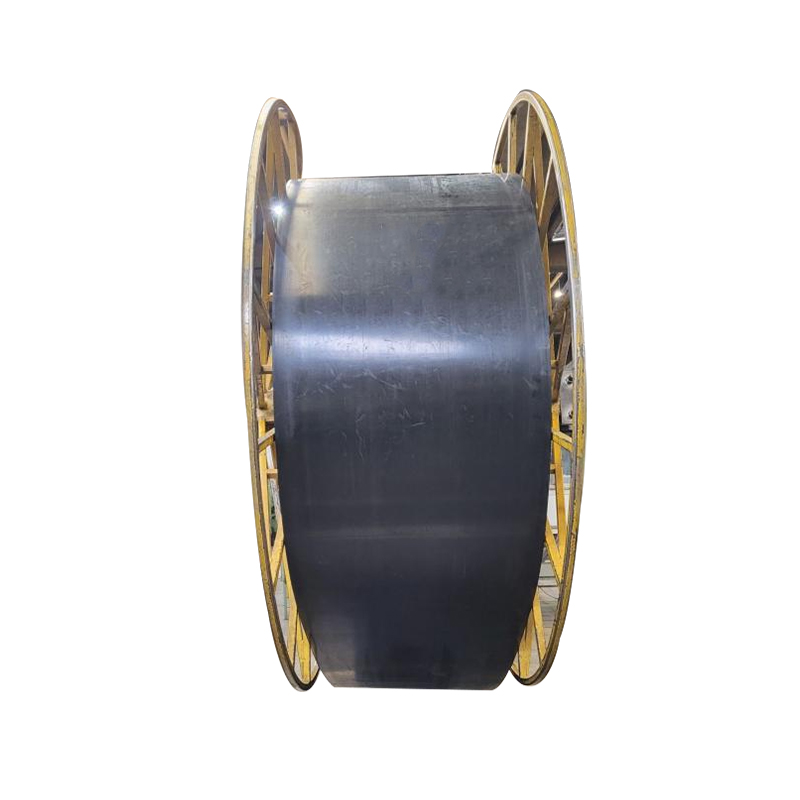
The Conveyor Belt is the key conveying medium of a belt conveyor system, responsible for carrying bulk materials and transmitting driving force during continuous operation.
Designed for reliable material transportation, the conveyor belt consists of a wear-resistant cover rubber layer and a reinforced carcass structure. Different rubber compounds, reinforcement materials, and belt constructions can be selected according to specific operating conditions, conveying distances, material characteristics, and environmental requirements.
The conveyor belt is widely used in bulk material handling systems across mining, metallurgy, cement, construction materials, ports, power generation, chemical processing, and other industrial applications.
Key Features
High Tensile Strength
The reinforced carcass structure provides excellent tensile performance, allowing the belt to withstand heavy loads and long-distance conveying requirements.
Excellent Wear Resistance
The wear-resistant rubber cover protects the belt surface against material impact and continuous friction, helping extend service life in demanding applications.
Strong Tear Resistance
The optimized rubber compound and reinforcement structure improve resistance to longitudinal tearing and mechanical damage during operation.
Multiple Material Options
Different rubber compounds and belt structures are available to meet various operating requirements, including heat resistance, cold resistance, oil resistance, and chemical resistance.
Stable Conveyor Performance
The durable construction ensures reliable material transportation while reducing downtime caused by belt damage or premature replacement.
Product Advantages
Reliable load carrying: Designed to support continuous bulk material transportation in industrial conveyor systems.
Long service life: Wear-resistant rubber cover helps withstand impact and abrasion from conveyed materials.
High load capacity: Reinforced carcass structure supports heavy-duty conveying applications.
Flexible customization: Available in different constructions and rubber compounds for specific working environments.
Reduced maintenance requirements: Durable materials help minimize belt replacement frequency.
Wide application range: Suitable for various bulk material handling industries.
Applications
The Conveyor Belt is widely used in belt conveyor systems for transporting bulk materials and processed products. Different belt constructions can be selected according to material properties, conveying distance, temperature conditions, and working environment.
Typical applications include:
Mining and Quarrying: Used for transporting ores, coal, limestone, aggregates, and other bulk materials.
Cement and Building Materials: Suitable for continuous conveying of raw materials and finished products.
Steel and Metallurgy: Applied in heavy-duty material handling systems requiring strong load capacity and abrasion resistance.
Ports and Terminals: Used for long-distance bulk material transportation and loading/unloading systems.
Power Generation: Suitable for coal handling and fuel transportation systems.
Chemical Industry: Available with oil-resistant and chemical-resistant options for special conveying environments.
General Industrial Conveying: Used in factories, warehouses, and material processing facilities.
Ordering & Quotation Information
Information Required for Quotation
Please provide the required belt width, belt length, belt construction or specification, conveyed material, operating conditions, installation environment, and required quantity. Temperature, oil, chemical exposure, abrasion, or other special conditions should be specified where applicable.
Technical Confirmation & Lead Time
We will confirm the conveyor belt according to belt requirements, material characteristics, operating conditions, and installation environment. Lead time depends on belt specifications, quantity, material preparation, and production requirements.
Packaging, Delivery & Quality
Packaging and delivery are arranged according to belt dimensions, quantity, transportation method, and destination. Specification, quantity, appearance, and packaging completeness are checked before shipment.
FAQ
What is a Conveyor Belt?
A Conveyor Belt is the main carrying component of a belt conveyor system, used to transport materials continuously between loading and discharge points.
What materials are conveyor belts made of?
A conveyor belt generally consists of rubber cover layers and reinforced carcass layers. Different reinforcement materials and rubber compounds can be selected depending on operating requirements.
How do I choose the right conveyor belt?
Selection depends on factors such as transported material, conveying capacity, belt speed, conveying distance, temperature, and environmental conditions.
Are conveyor belts available for harsh environments?
Yes. Different conveyor belt types are available for demanding conditions, including heat-resistant, cold-resistant, oil-resistant, and chemical-resistant applications.
What industries use conveyor belts?
Conveyor belts are widely used in mining, cement, steel, ports, power generation, chemical processing, and other bulk material handling industries.
How can conveyor belt service life be improved?
Selecting the correct belt type, using proper conveyor components, maintaining suitable tension, and preventing excessive impact or misalignment can help extend belt service life.
|
Belt width: |
300–2200 mm |
|
Fabric carcass type: |
NN (Nylon) / EP (Polyester) / CC (Cotton canvas) |
|
Number of plies: |
2–12 |
|
Cover rubber thickness: |
top 3.0–6.0 mm, bottom 1.5 mm |
|
Belt speed range: |
0.5–5.0 m/s |
|
Thickness range: |
3–20 mm |
|
Working temperature: |
-40°C ~ +150°C |
technological innovation, keep improving
With ingenuity, we are committed to global sustainable development.
Professional Conveyor Manufacturer, Since 1998.
Mobile QR Code
News & Updates
Contact infor.
 Phone / Whatsapp:
 Tel: +86-0519-86511555
 E-mail: david@wuyunconveyor.com
 Add: No.16 Xinfa Road, Wujin District, Changzhou City, Jiangsu Province, China

 English