 English
 简体中文
简体中文  Esperanto
  Afrikaans
  Català
  Cymraeg
  Galego
  繁体中文
繁体中文  Latviešu
  icelandic
  ייִדיש
  беларускі
  Hrvatski
  Kreyòl ayisyen
  Shqiptar
  Malti
Malti  lugha ya Kiswahili
  አማርኛ
አማርኛ  Bosanski
  Frysk
Frysk  ភាសាខ្មែរ
  ქართული
  ગુજરાતી
  Hausa
Hausa  Кыргыз тили
  ಕನ್ನಡ
ಕನ್ನಡ  Corsa
Corsa  Kurdî
Kurdî  മലയാളം
  Maori
Maori  Монгол хэл
  Hmong
Hmong  IsiXhosa
  Zulu
Zulu  Punjabi
  پښتو
پښتو  Chichewa
  Samoa
Samoa  Sesotho
  සිංහල
සිංහල  Gàidhlig
  Cebuano
  Somali
  Тоҷикӣ
  O'zbek
  Hawaiian
  سنڌي
سنڌي  Shinra
  Հայերեն
  Igbo
Igbo  Sundanese
  Lëtzebuergesch
  Malagasy
  Yoruba
  Español
  Português
  русский
  Français
  日本語
日本語  Deutsch
  tiếng Việt
  Italiano
  Nederlands
  ภาษาไทย
  Polski
  한국어
한국어  Svenska
  magyar
  Malay
Malay  বাংলা ভাষার
  Dansk
Dansk  Suomi
Suomi  हिन्दी
  Pilipino
  Türkçe
  Gaeilge
  العربية
  Indonesia
  Norsk
Norsk  تمل
تمل  český
český  ελληνικά
  український
  Javanese
  فارسی
فارسی  தமிழ்
தமிழ்  తెలుగు
  नेपाली
  Burmese
  български
  ລາວ
ລາວ  Latine
  Қазақша
  Euskal
  Azərbaycan
  Slovenský jazyk
  Македонски
  Lietuvos
  Eesti Keel
  Română
  Slovenski
  मराठी
मराठी  Srpski језик


Conveyor Carrying Roller: Can Idler Design Really Prevent Belt Damage and Reduce Maintenance Costs?
In bulk material handling, the conveyor belt itself commands attention. It is visible, expensive, and obviously critical to operations. Yet the components that support the belt—the conveyor carrying roller assemblies that bear the load of thousands of tons of material day after day—determine belt life more directly than any other factor. A misaligned or seized conveyor carrying roller creates a wear point that abrades the belt cover, generates heat, increases power consumption, and ultimately causes premature belt replacement costing tens of thousands of dollars.
Conveyor carrying roller manufacturers have responded with specialized designs addressing specific operational challenges: material build-up, belt tracking, impact resistance, and environmental corrosion. Among these specialized variants, the spiral idler, parallel comb idler, inverted V type idler, and ceramic conveyor idler each serve distinct applications. These conveyor carrying roller types share common manufacturing elements—high-frequency welded pipes, high-density nylon seals, bearings, and round steel—but differ in surface configuration and functional optimization.
Why Conveyor Carrying Roller Selection Matters
A conveyor system is only as reliable as its carrying roller train. The conveyor carrying roller supports the belt and the material load while maintaining proper belt alignment. When a roller fails, the consequences cascade:
- Belt damage: A seized conveyor carrying roller becomes a stationary abrasive surface, carving a groove into the moving belt cover
- Increased drag: Non-rotating or high-resistance rollers increase drive motor power consumption
- Material spillage: Misaligned rollers allow belt mistracking, dumping material off the side of the system
- Structural stress: Uneven roller resistance creates belt tension variations that stress splices and drives
The specialized conveyor carrying roller designs described below each address specific failure modes common in particular industries and applications.
Spiral Idler: Self-Cleaning for Sticky Materials
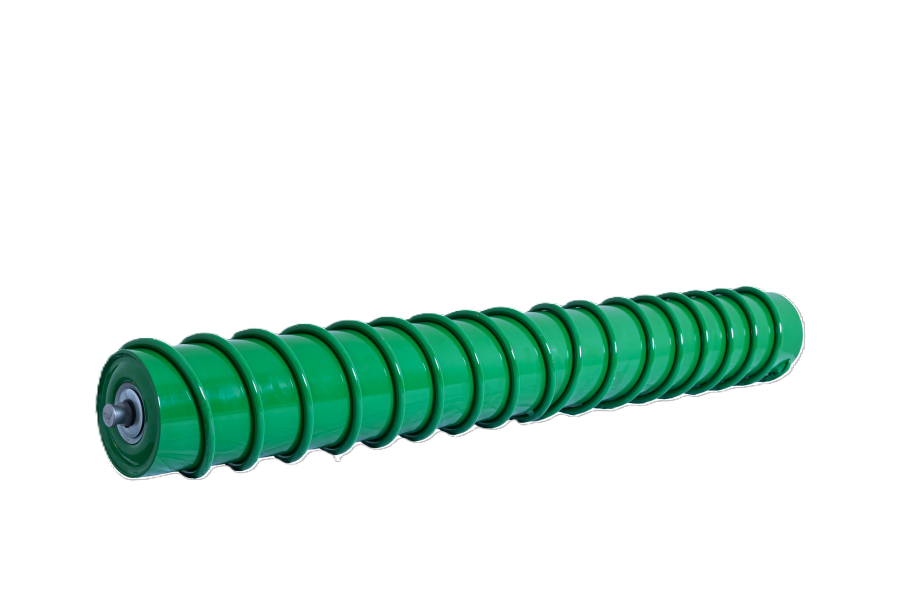
The spiral idler is a conveyor carrying roller variant designed for applications where material carryback adheres to the belt surface. Made from high-frequency welded pipes, high-density nylon seals, spiral springs, bearings, and round steel, the spiral idler features a helical surface configuration.
Operating Principle
As the belt passes over the spiral idler, the helical pattern creates differential contact points that break the surface tension between belt and adhered material. Sticky deposits—clay, wet sand, crushed ore with moisture—release from the belt surface rather than accumulating on the conveyor carrying roller.
Key Applications
- Aggregate and sand processing
- Clay and mineral handling
- Coal preparation plants
- Any belt conveying sticky or high-moisture materials
The spiral design reduces the need for separate belt scrapers and cleaners, which themselves require maintenance and adjustment. For operators seeking a conveyor carrying roller with passive self-cleaning capability, the spiral idler provides a maintenance-free solution.
Parallel Comb Idler: Return Belt Cleaning with Self-Cleaning Structure
The parallel comb idler is one type of conveyor carrying roller specifically configured for return belt applications. It is made of high-frequency welded pipes, high-density nylon seals, comb-shaped rubber rings, spacers, bearings, and round steel.
Return Belt Function
On the return side of a conveyor system—the portion of the belt traveling empty beneath the carrying run—material carryback can accumulate, dropping off along the return path and creating housekeeping problems. The parallel comb idler is a conveyor carrying roller designed to fix return belts while providing active cleaning action.
Self-Cleaning Characteristics
The comb-shaped rubber rings create a mechanical cleaning action on the belt surface. As the return belt passes over this conveyor carrying roller, adhered material is dislodged and falls away rather than traveling with the belt to the tail pulley. Key performance attributes include:
- Low noise: Comb design reduces contact noise compared to solid-surface rollers
- Thick tube wall: Enhanced structural durability for return-side service
- Flexible rotation: Low rolling resistance minimizes power loss
- Low resistance: Reduced bearing drag compared to conventional return idlers
For facilities struggling with material carryback along conveyor return paths, the parallel comb idler offers a passive cleaning solution that requires no external power or control systems.
Inverted V Type Idler: Belt Suppression and Tracking
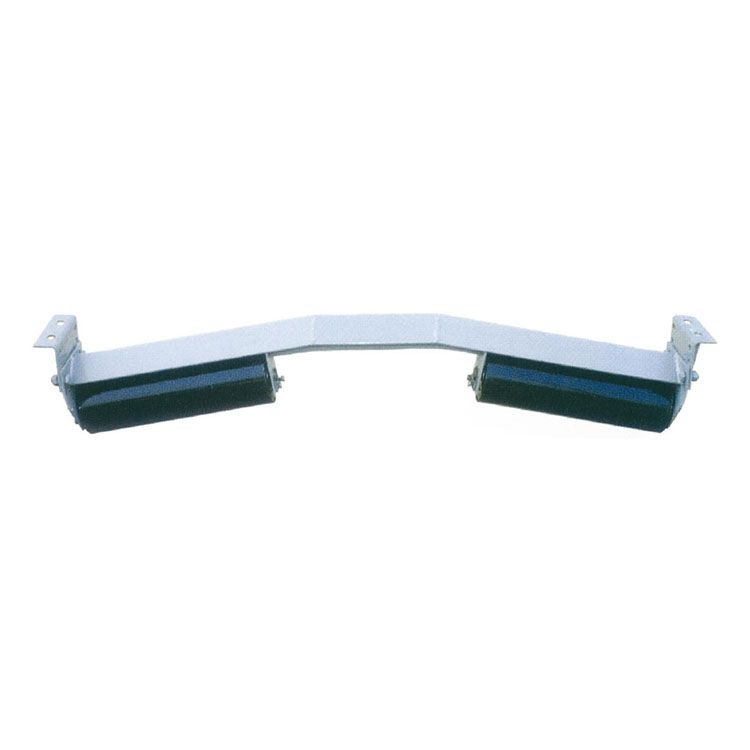
The inverted V type idler is a conveyor carrying roller primarily used to fix the angle change of the return belt in belt conveyor systems. Its primary function is belt suppression—preventing the belt from flying upward and scratching structural components.
Belt Suppression Function
On long conveyors, particularly those with inclined sections or high belt speeds, the return belt can lift off the idler rolls due to belt tension dynamics or air entrainment. A belt that flies upward contacts structural steel—cross beams, stringers, walkways—causing cover abrasion and potential belt edge damage.
The inverted V configuration of this conveyor carrying roller creates a profile that captures the belt and holds it down, maintaining consistent contact while allowing free rotation. Unlike flat return idlers that allow vertical belt movement, the inverted V shape physically constrains belt position.
Sealing and Environmental Protection
Both ends of this conveyor carrying roller incorporate labyrinth seal structures combined with double-sided sealed bearings. This dual-barrier system provides:
- Dust protection: Labyrinth seals prevent fine particulate ingress
- Water resistance: Double-sided seals exclude moisture in wet environments
- Extended bearing life: Contamination exclusion directly correlates with bearing service life
For conveyor carrying roller products operating in dusty or wet environments—mines, quarries, outdoor stockpile conveyors—sealing quality is often the difference between three months and three years of service life.
Ceramic Conveyor Idler: Abrasion and Corrosion Resistance
The ceramic conveyor idler is a conveyor carrying roller constructed with aluminum oxide (alumina) surfaces rather than steel or rubber. This material selection provides specific advantages for aggressive applications.
Material Properties
Aluminum oxide (Al₂O₃) ceramic offers:
- High hardness: Exceeds 80 on the Rockwell HRA scale, significantly harder than steel
- Acid resistance: Unaffected by acidic solutions that corrode steel rollers
- Alkali resistance: Chemically stable in basic environments
- Abrasion resistance: Survives contact with sharp, hard materials that would gouge steel or rubber
Suitable Applications
The ceramic conveyor carrying roller is widely used in mining, sand and gravel, steel metallurgy, chemical industry, and other industries where:
- High-hardness materials (iron ore, taconite, granite) wear away steel idlers rapidly
- Corrosive environments (fertilizer plants, chemical handling) attack steel surfaces
- High belt speeds accelerate wear on conventional conveyor carrying roller surfaces
Trade-offs
Ceramic idlers typically cost more than steel idlers and are heavier, requiring consideration of belt drive capacity and structural support. However, for operations experiencing idler changeouts every few months due to abrasion, the extended service life of ceramic often justifies the premium. The ceramic conveyor carrying roller offers longer intervals between replacements, reducing labor costs and downtime for maintenance.
Common Manufacturing Quality Indicators
Across all conveyor carrying roller types—spiral, comb, inverted V, ceramic—certain manufacturing characteristics indicate quality regardless of configuration.
High-Frequency Welded Pipe
The tube body of a conveyor carrying roller must be straight, round, and consistently wall-thickness. High-frequency welding produces a seam with minimal internal flash and consistent metallurgy. Poor-quality tubes cause roller eccentricity, creating vibration and belt flutter.
High-Density Nylon Seals
Seals exclude contamination. Low-density seals absorb moisture, swell, and lose effectiveness. High-density nylon maintains dimensional stability, keeps lubricant in, and keeps contaminants out. The conveyor carrying roller seal is often the component that determines service life.
Bearings
Double-sided sealed bearings (also called sealed-for-life bearings) are pre-lubricated and require no maintenance. The conveyor carrying roller bearing selection must match load and speed requirements; undersized bearings fail prematurely, while oversized bearings increase cost unnecessarily.
Round Steel
Shaft ends and bearing mounting surfaces require good roundness and surface finish. Imprecise shafts create misalignment, loading bearings unevenly and causing early failure of the conveyor carrying roller assembly.
Send Inquiry


X
We use cookies to offer you a better browsing experience, analyze site traffic and personalize content. By using this site, you agree to our use of cookies.
Privacy Policy